
JOLTS Recap (June)
A Meh Report; Hiring Has Improved by a Small Amount in 2026

TL;DR: The June JOLTS report confirms the labor market has improved a little this year, with a slight pickup in hiring and an even slighter pickup in quits.
This post covers:
The Big Picture
Data Rundown
On Openings
More below chart.
1. The Big Picture
In the beginning of the year, I wrote a brief characterization of what a slight improvement in the US labor market might look like:
The second version of “acceleration” is mild: the mirror image of 2025. The unemployment rate slips down to around 4% (where it began the year). Hiring picks up a tiny bit. I’d put this as the 80th percentile outcome.
I don’t deserve any credit for this as a forecast - I thought it was an unlikely outcome, yet here we are. But I did get the contours of such a scenario correct. Midway through the year, the unemployment rate is halfway back to 4%. And we’ve also seen a tiny pickup in hiring:
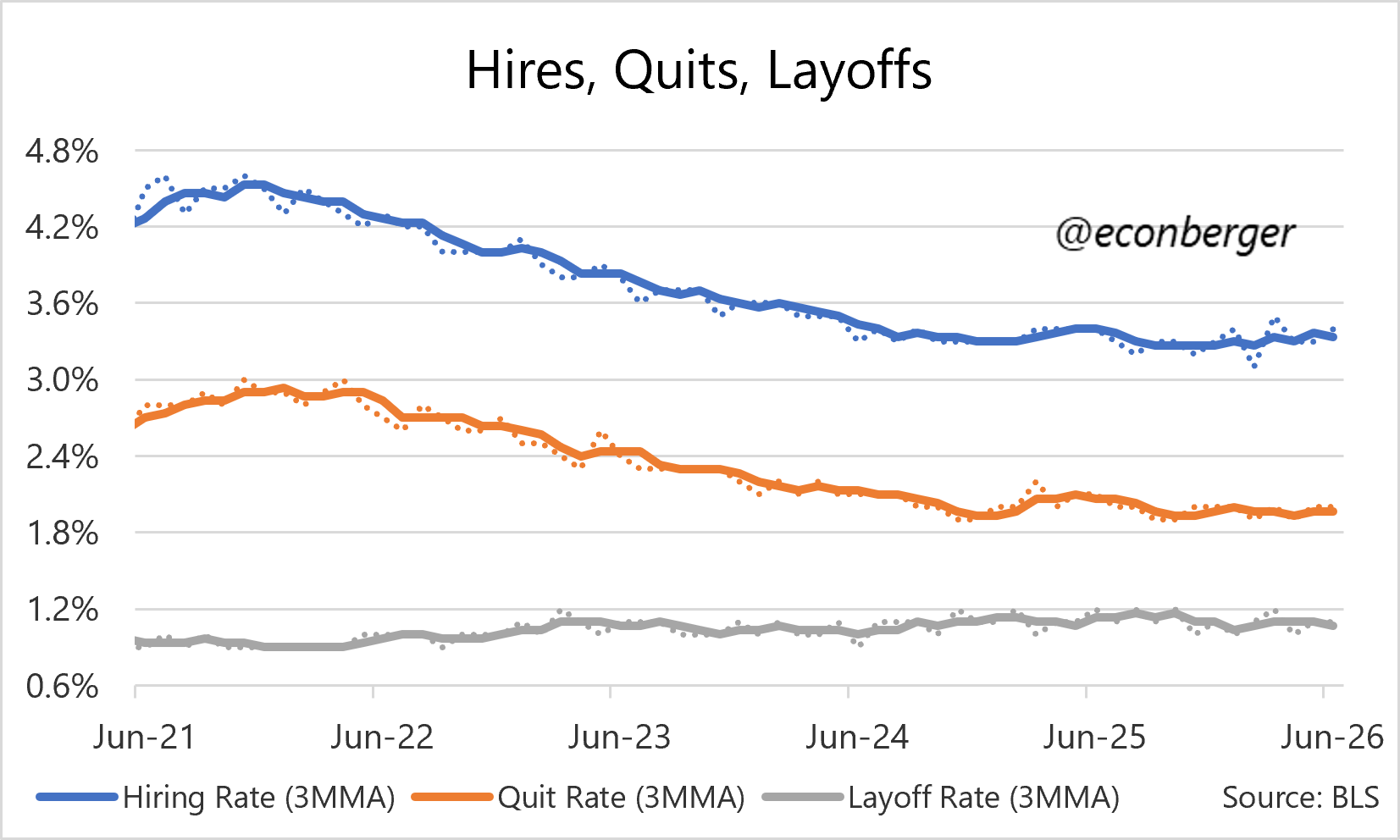
If you look at that chart and argue, “Guy I don’t see any increase in hiring”, I don’t entirely blame you! Hiring averaged 5.18 million per month in the 2nd half of 2025; it’s averaged 5.27 million per month in the first half of 2026.1 That’s a 1.6% increase, which isn’t nothing but is also dwarfed by the 2022-24 decline.
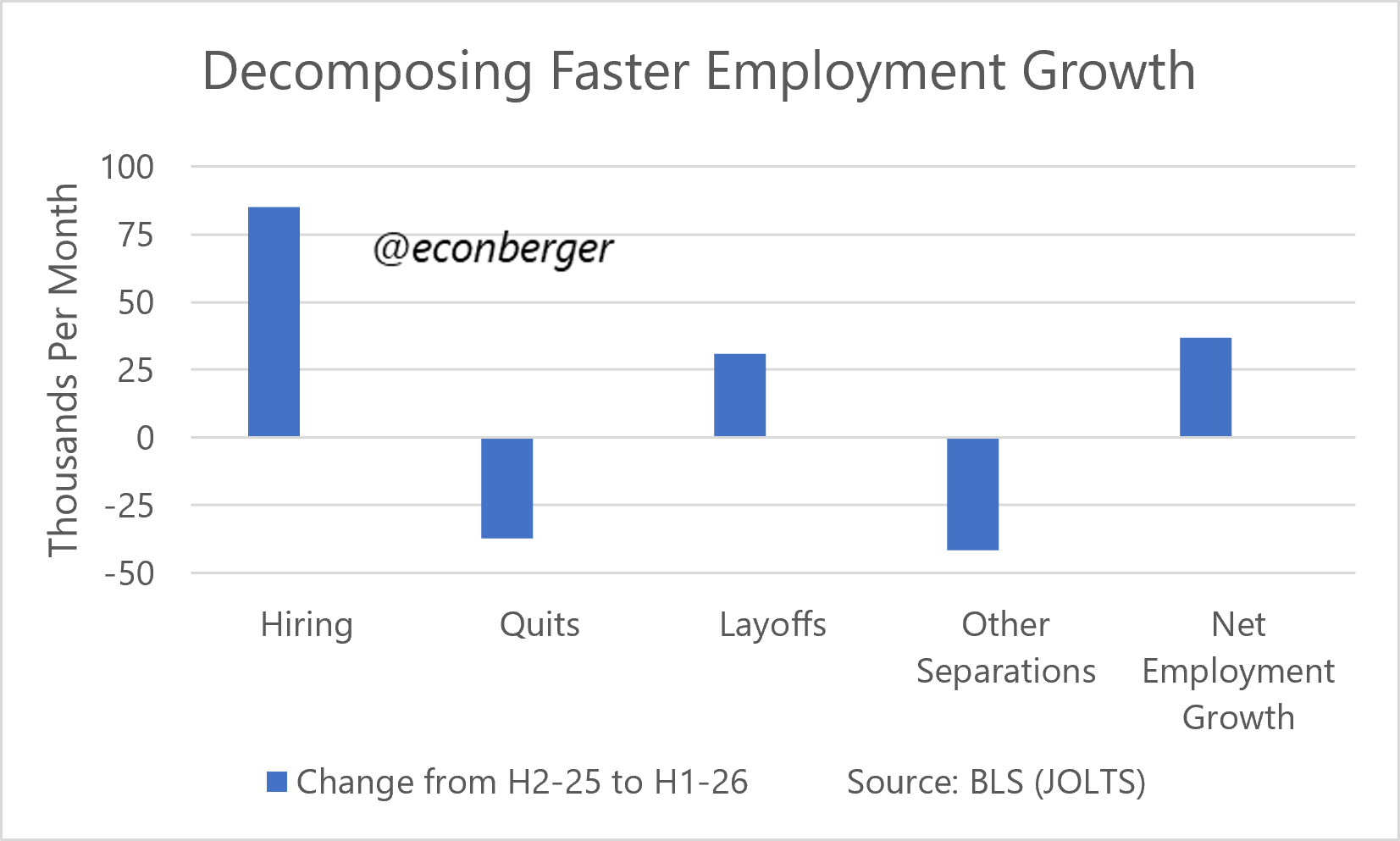
One thing that surprised me two months ago, as we were staring at a meaningful pickup in employment growth and a small decline in the unemployment rate, is then-unusual shifts in various turnover components. My description of the “mild acceleration” described a slight pickup in hiring and didn’t say anything about layoffs. But the data through 4 months of the year looked like hiring and layoffs providing an equal lift to employment growth, and quits moving in the wrong direction.
After two more months of data (and revisions to April), things look much more normal. The increase in hiring, while still small, now looks almost twice as big. Quits have risen a teeny tiny bit. And all this happened despite average net employment growth for the year being a little slower with two additional months of data.
I think this also gives us a hint of what further labor market recovery, if it materializes2, will look like. It would come primarily via further increases in hiring shadowed by rising quits - perhaps in an employment-growth-neutral fashion.3 I doubt we have much more room for layoffs to decrease, though initial claims are doing their best to prove me wrong.
2. Data Rundown
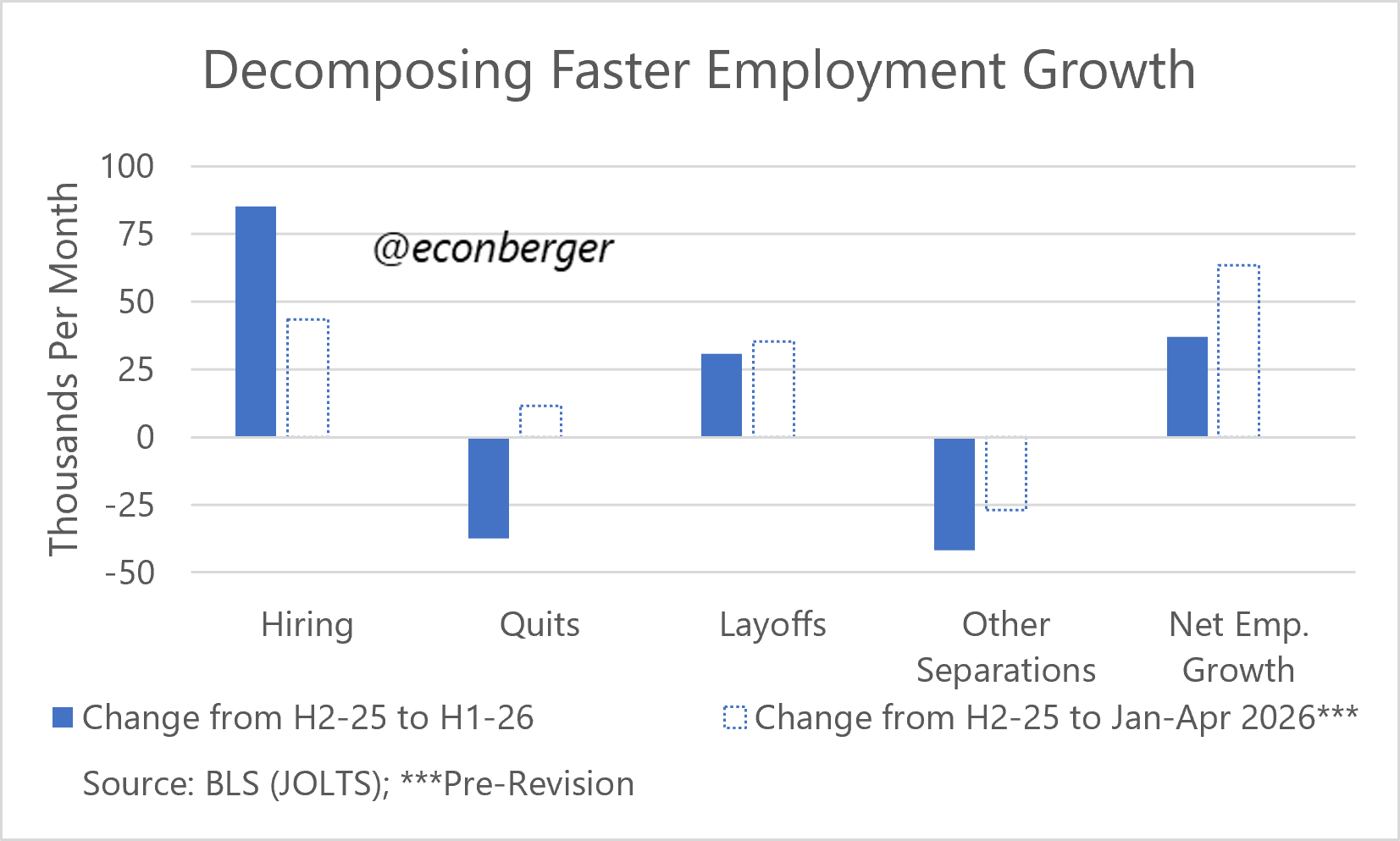
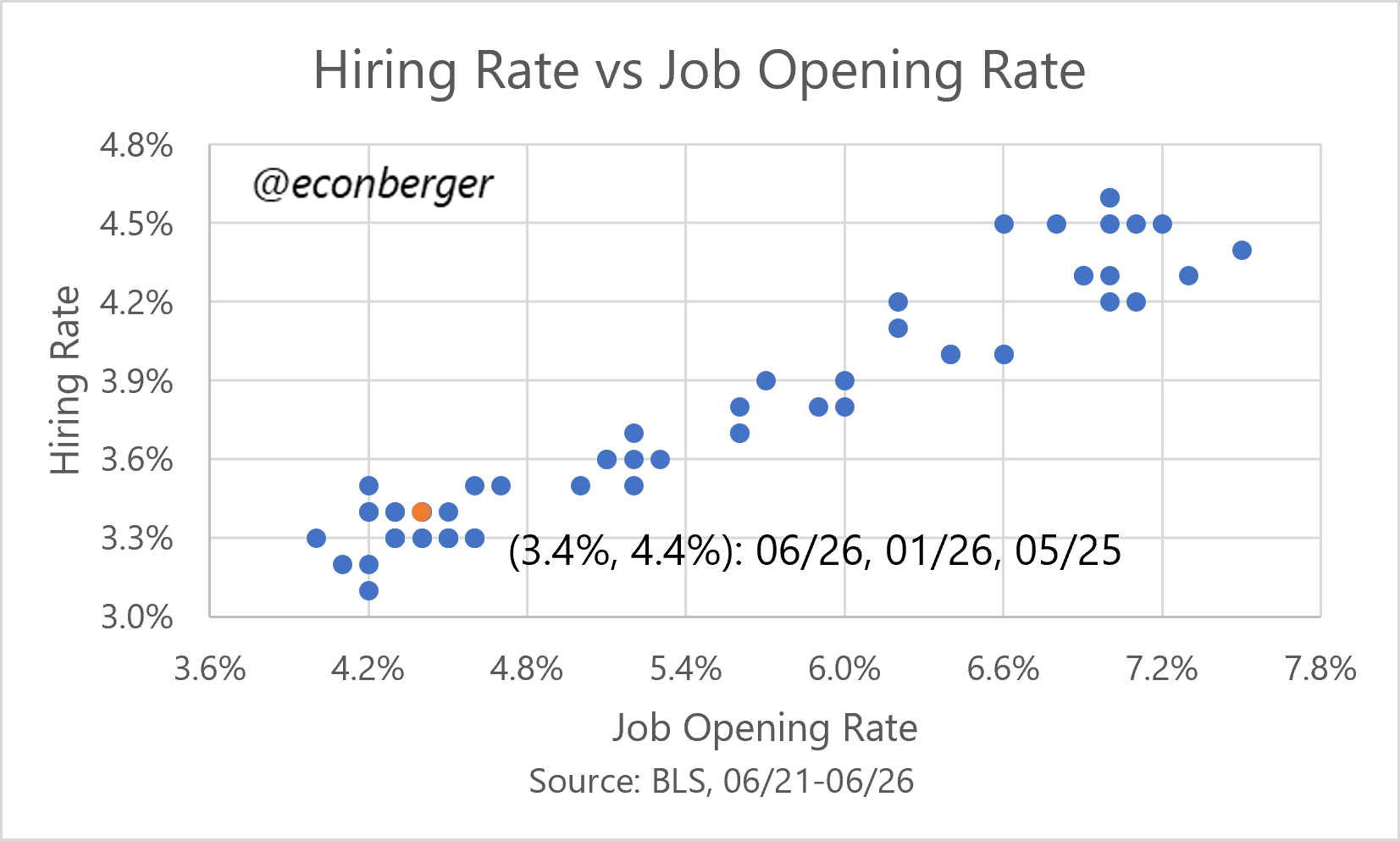
The hiring rate was 3.4%. That’s an improvement over last month and also over what we saw during much of H2 2025, but a small one. We saw hiring rates of 3.4% during mid-2013 through early 2014, when the unemployment rate was a little above 7%. It’s still really hard for people who need a new job to find them, though not quite as hard as before.
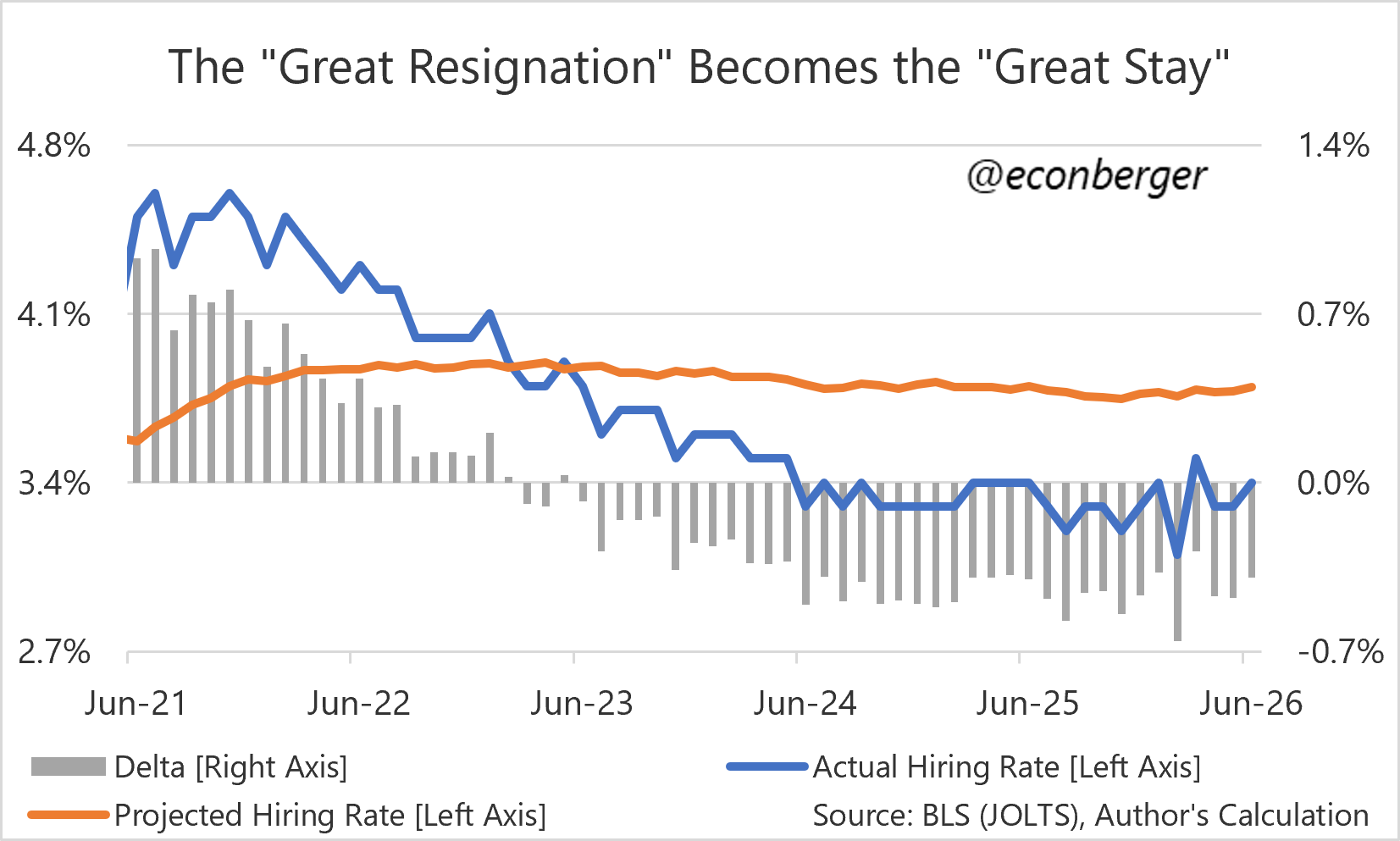
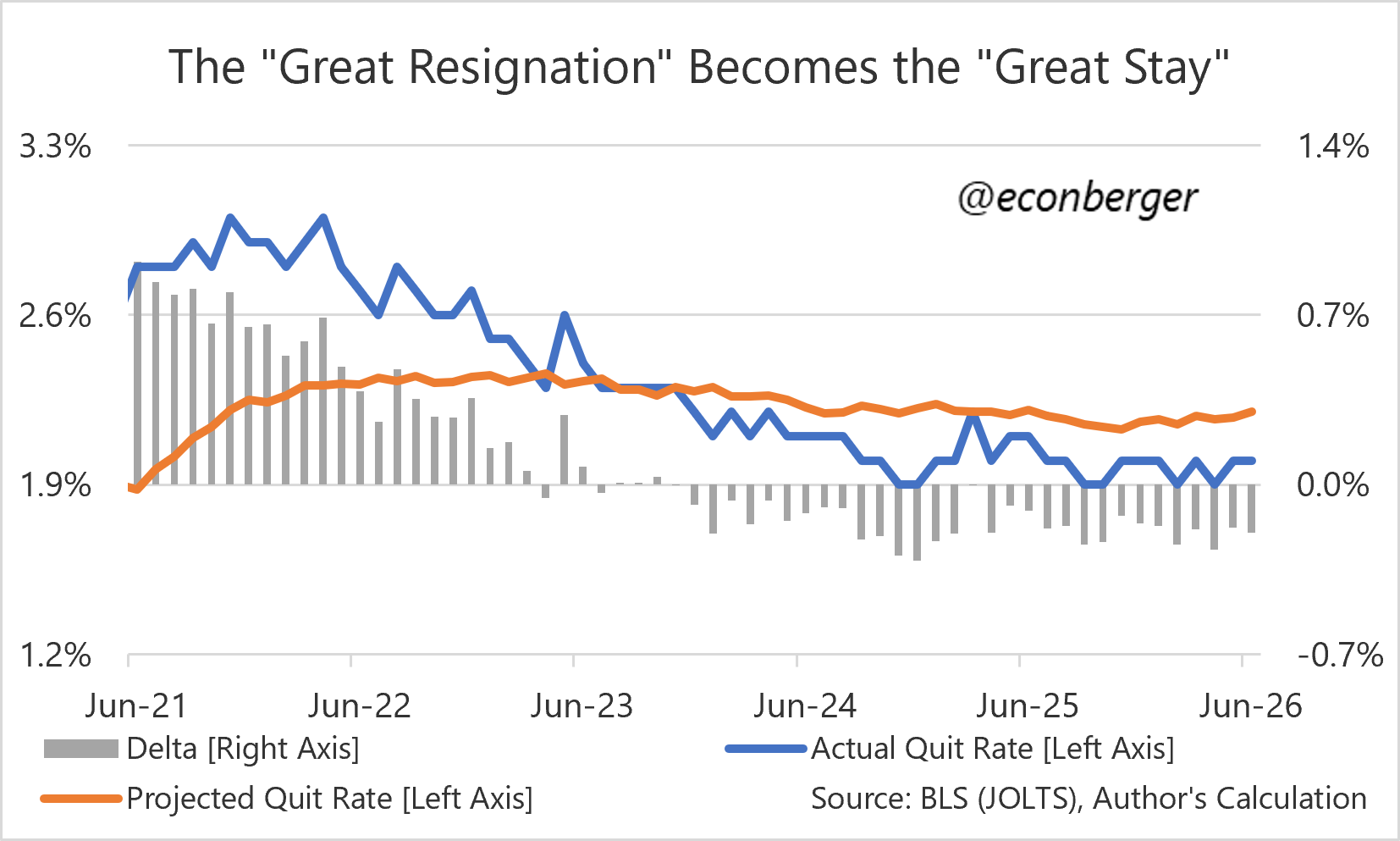
In the previous section, I wrote that quits have increased a little bit relative to the 2nd half of 2025. A very little bit. If hiring increases further, I expect that increase to become more pronounced, but for now it’s barely distinguishable from “quits have been flat for the past 18 months.
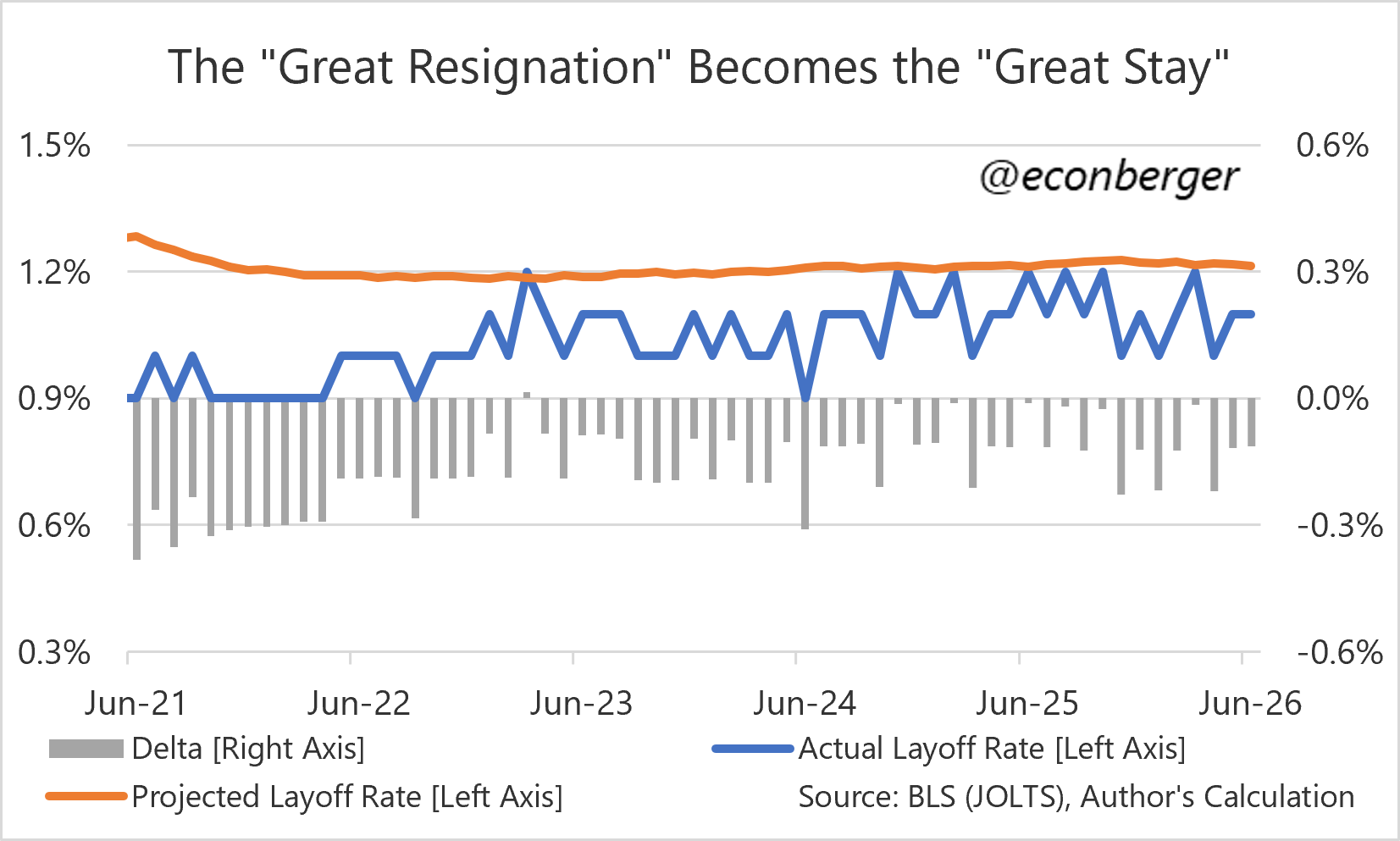
And layoffs remain very low by historical standards. Their decline relative to the 2nd half of 2025 has been one of the things I didn’t expect:
3. Job Openings
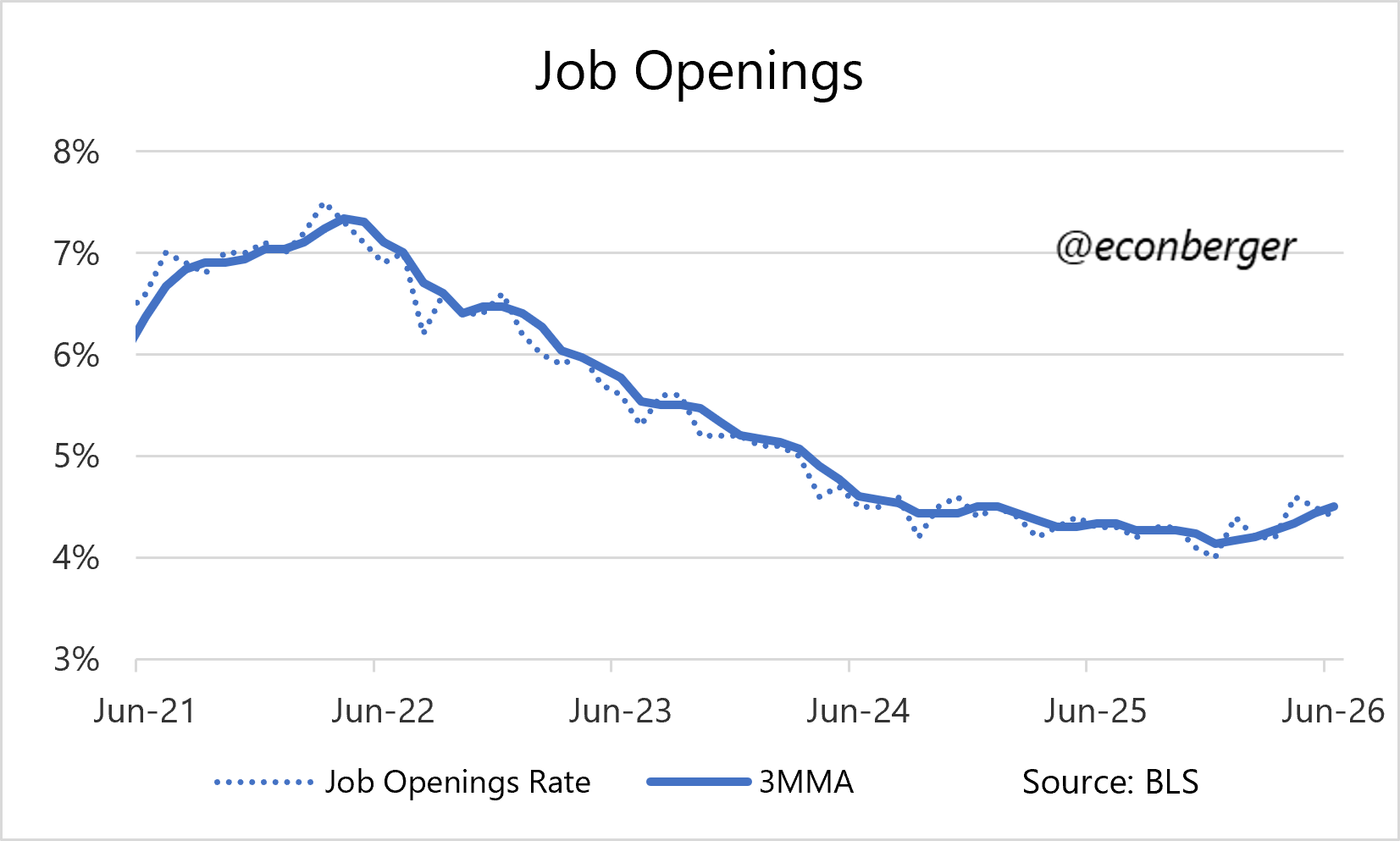
For as long as I’ve been writing this newsletter (and long before that), I’ve been a mild job openings skeptic. They provide less signal than the turnover portion of the report. That said, if you’re committed to ignoring everything else in this report, you’ll find some signal, because they’ve gone up a little recently:
There’s an interesting question: why have we seen openings go up, but not Indeed job postings? I have a few thoughts. The first is that Indeed measures online postings, and the BLS measures openings. These are not the same thing! An opening might not have an associated online posting, and for that matter an online posting might not have an associated opening. So the two series might both be accurate right now.
The second is that both face measurement issues. The BLS theoretically has a representative sample of US firms; Indeed probably does not. And the BLS’s representative sample can drift off-track (only to be guided back on course by the annual revision); I also believe that Indeed’s data gets revised over time, though my knowledge of that process is extremely limited.
My third observation is that the recent deviation between the two is not particularly large by historical standards. And, if we indulge ourselves in an N=1 inference, it looks like openings go faster down AND up; so if we really are entering an “up” period, it wouldn’t be surprising to see them increase faster than postings.
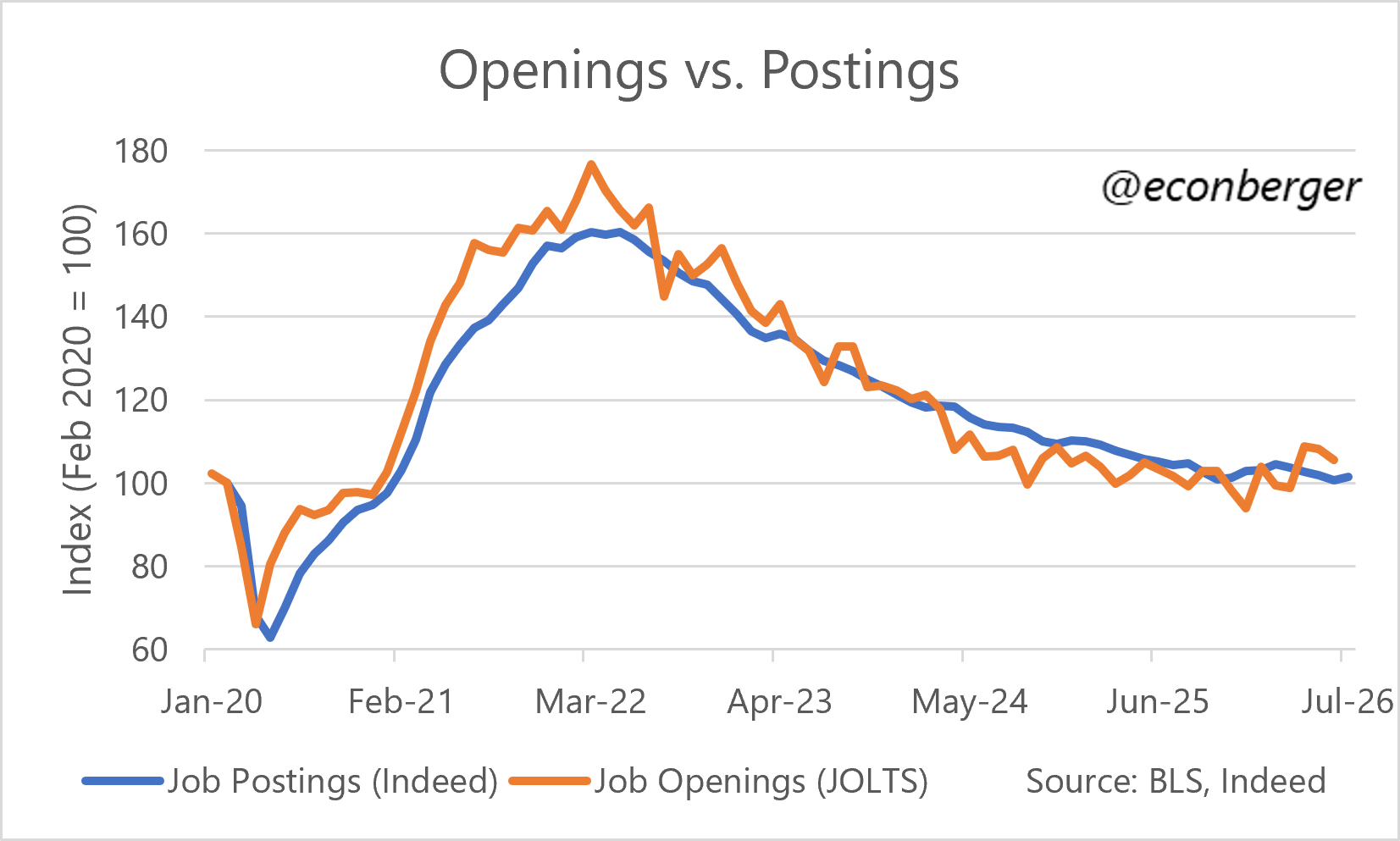
In general, I’m inclined to “believe” openings - the job market really is getting a little better. We’ve seen broad-based improvement in a wide range of labor market data this year. We’ve seen unemployment go down (a little) and hiring go up (a little) this year. Why wouldn’t openings go up (also a little) in such an environment?
The increase in the hiring rate over this period was from 3.27% to 3.33%.
Not a trivial “if” - between higher energy prices and an increasingly hawkish Fed, headwinds have intensified relative to the beginning of the year.
The way I’d think about it: it’s possible for gross hiring to increase further, even a lot further, without much of an impact on net employment growth - because hiring would be coupled with more quits.
One thing on the Indeed job postings front is that it's tied to company performance. We still see high penetration among industrial employees (about 60% use frequently), but google, social media, and AI, are all steadily climbing. I could see companies reimagining their marketing approach to rely less on job boards. That's not necessarily the reason for the disconnect today, but something to monitor in the future!